
Key takeaways
- 1What Exactly Is Shadow AI — and How Did We Get Here?
- 2Why Shadow AI Spreads So Fast (And Why Banning It Doesn't Work)
- 3The Real Risks: Data, Compliance, and Accountability
- 4How to Identify Shadow AI in Your Organisation Right Now
- 5Building a Shadow AI Governance Framework That Actually Sticks
- 6Case Study: SynPhera
- 7Frequently Asked Questions
“Every transformative technology gets adopted twice — first unofficially, by the people who need it, and then officially, by the organisations that realise they can't afford to ignore it.”
Shadow AI is not a future risk to prepare for. It is a present reality already running inside your organisation — in your finance team's spreadsheet summaries, your developers' debugging sessions, your marketing team's content drafts. The tools are being used, the data is being shared, and in most organisations, no one has a complete picture of how much of either is happening. This guide is for the business leaders who want to change that — not by restricting their workforce, but by building the infrastructure to make AI adoption both productive and governed.
What Exactly Is Shadow AI — and How Did We Get Here?
Shadow AI refers to the use of artificial intelligence tools — large language models, AI writing assistants, code generation platforms, image generators, AI-powered analytics tools — by employees without the knowledge, approval, or oversight of their IT, security, or leadership teams. It is the AI-era evolution of Shadow IT, the long-running enterprise challenge of employees using technology outside formally sanctioned channels.
But Shadow AI is not simply Shadow IT with a different name. The distinction matters because of what AI tools actually do with data. A file stored in a personal Dropbox account stays there, unchanged. Data submitted to an AI model is actively processed — ingested, interpreted, potentially retained, and in some configurations used for model training. The data does not just move; it becomes input into an intelligent system whose data handling practices vary dramatically depending on the tier of subscription, the platform's terms of service, and the jurisdiction in which the processing occurs.
| Shadow IT | Shadow AI | |
|---|---|---|
| What it is | Any technology used without IT approval: apps, devices, cloud storage. | AI tools used without the knowledge, approval or oversight of IT, security or leadership: language models, writing assistants, code generation, image generators and analytics tools. |
| What happens to the data | A file stored in a personal Dropbox account stays there, unchanged. | Data is actively processed: ingested, interpreted, potentially retained, and in some configurations used for model training. |
| What it needs | General IT policy. | Its own governance approach, because the risk profile is fundamentally different. |
How the current situation developed
The conditions for Shadow AI were created by two forces moving at very different speeds. First, AI tools became genuinely, demonstrably useful to knowledge workers at a pace that outran most organisations' ability to evaluate, approve, and deploy them. Productivity gains from AI in writing, summarisation, research, and coding tasks are measurable and significant — studies consistently show 25–40% time savings on routine cognitive tasks. When employees discover a tool that saves them two hours a day, they do not wait for a procurement cycle.
Second, most enterprise IT and security frameworks were built for a world where the main risks were data storage and transfer — moving files to personal drives, using unapproved communication tools. They were not designed to evaluate, monitor, or govern the use of AI tools that process data in real time and at scale. The result is a gap: employee AI adoption running years ahead of enterprise AI governance.


Understanding this origin is important for how organisations respond. Businesses that treat Shadow AI as a compliance violation to suppress will find their efforts largely ineffective — and will drive usage underground, reducing the already-limited visibility they have. Businesses that treat it as evidence of unmet demand respond by building the AI strategy and infrastructure that meets employee needs within a governed framework.
Why Shadow AI Spreads So Fast (And Why Banning It Doesn't Work)
Shadow AI spreads for the same reason any useful technology spreads: it makes the people using it measurably better at their jobs. Once one person in a team discovers that a tool cuts their report-writing time by half, that knowledge moves through teams quickly — especially in high-performance cultures where sharing productivity tips is part of the work. The spread is organic, informal, and rapid.
The speed of spread is amplified by several structural factors that are common across organisations:
- No sanctioned alternatives. When employees discover AI tools make their work faster and better, and their organisation offers no approved equivalent, the choice is between an unapproved tool and no tool at all. Most employees choose the tool.
- Low friction access. Consumer and freemium AI tools require only an email address and a browser. There is no IT ticket, no procurement approval, no onboarding process. The friction between "I heard about this tool" and "I'm using this tool" is measured in minutes.
- Invisible usage profile. AI tool usage does not look different from any other HTTPS web traffic at the network level without specific monitoring in place. Employees are not hiding their usage; most assume it is fine. But the usage is effectively invisible to IT and leadership teams without targeted monitoring.
- Peer recommendation as the primary discovery channel. Most Shadow AI tools are adopted through peer recommendation rather than any formal channel. A developer who finds a code generation tool useful tells three colleagues. Those colleagues tell their teams. Shadow AI scales through social networks, not procurement processes.
- Absent or outdated policy. Many organisations' acceptable use policies predate the mainstream availability of AI tools and do not address them explicitly. In the absence of a clear policy, most employees assume permissibility — and they are not wrong to do so.

Why banning does not work
The instinctive organisational response to discovering Shadow AI is to ban it — to issue a policy restricting the use of unapproved AI tools and enforce it through network-level blocks. This approach fails for predictable reasons. Domain blocks are easily circumvented: employees use personal devices, mobile data connections, or alternative tools that accomplish the same tasks. More fundamentally, a ban does not eliminate the underlying demand. Employees who have discovered AI productivity gains will find ways to maintain them — the organisation simply loses the limited visibility it had.
The more effective approach is to replace Shadow AI with sanctioned AI — to build the managed AI infrastructure that gives employees access to AI tools that are compliant, governed, and monitored. The employees get the productivity gains they have found. The organisation gets visibility, control, and protection. No one has to choose between productivity and compliance.
| Ban and block | Replace with sanctioned AI | |
|---|---|---|
| What happens | Domain blocks are circumvented with personal devices, mobile data or alternative tools. | Employees get compliant, governed and monitored AI tools. |
| Demand for AI | Unchanged. Employees who found productivity gains find ways to keep them. | Met, inside a governed framework. |
| Visibility | The limited visibility the organisation had is lost. | The organisation gains visibility, control and protection. |
The Real Risks: Data, Compliance, and Accountability
The risk profile of Shadow AI spans three interconnected dimensions, each with its own regulatory and operational implications. Understanding the full scope is essential for building a response proportionate to the actual exposure — rather than one focused narrowly on the most visible risk category.
| Risk dimension | What is exposed | Where it hits hardest |
|---|---|---|
| Data security and third-party processing | Inputs and outputs retained by platforms, multiple third-party processing chains, and data processed in jurisdictions that may breach residency requirements. | Consumer and free-tier accounts, which carry no contractual protection. |
| Regulatory compliance | Patient data, client portfolio data, transaction records and material non-public information shared with unapproved platforms. | Healthcare, financial services and government. |
| Accountability and auditability | AI-generated outputs that reach clients, regulators and the public with no audit trail, accuracy review or way to correct errors. | Customer communications, financial projections and strategic recommendations. |
Data security and third-party processing
When employees submit data to external AI platforms, that data is processed by systems outside the organisation's control. The practical implications depend heavily on the specific tool, tier of subscription, and terms of service — but the default risk profile for consumer and freemium AI tools is significant:
- Training data retention. Many consumer AI platforms retain user inputs and outputs, which may be used for model improvement. Enterprise-tier agreements typically offer opt-outs or contractual prohibitions, but employees using personal accounts or free tiers receive no such protection.
- Third-party processing chains. AI platforms frequently use third-party infrastructure providers for processing, storage, and model hosting. Data submitted to a consumer AI tool may be processed by multiple third-party systems, each with its own data handling practices.
- Data residency gaps. Organisations with data localisation requirements — common in financial services, healthcare, and government sectors — may find that consumer AI tools process data in jurisdictions that violate those requirements, creating compliance exposure.
Regulatory compliance in regulated industries
The compliance implications of Shadow AI are most acute in regulated sectors. Healthcare organisations handling patient data face direct exposure when clinical staff use consumer AI tools for documentation, summarisation, or research tasks — patient data submitted to a non-compliant third-party system can constitute a reportable data incident under applicable healthcare data protection frameworks. Financial services firms face equivalent exposure when client portfolio data, transaction records, or material non-public information is processed through unapproved AI platforms.
The common thread across regulated industries is that the regulatory frameworks governing data handling were designed before AI tools existed in their current form, but they apply fully regardless. A data protection obligation that prohibits sharing client data with unapproved third parties applies equally to sharing that data with an AI platform.


Accountability and auditability gaps
Beyond the data security and compliance dimensions, Shadow AI creates a structural accountability problem: organisations cannot audit, improve, or be accountable for AI outputs they do not know are being produced. When an employee uses an unsanctioned AI tool to generate customer communications, financial projections, or strategic recommendations, the output carries the organisation's implicit endorsement without any of the quality controls, accuracy checks, or oversight mechanisms that formal AI deployment would require.
How to Identify Shadow AI in Your Organisation Right Now
The first step in governing Shadow AI is understanding its current extent. Most organisations significantly underestimate how many AI tools are in use across their workforce — the actual number, revealed by a structured audit, is typically two to three times higher than IT teams initially estimate. A complete discovery process combines several complementary approaches:

- Employee survey (anonymised). Ask employees across departments to report which AI tools they use, how frequently, and for what tasks. Anonymisation significantly increases response honesty. The survey typically surfaces the majority of consumer AI tool usage, particularly in departments with lower technical oversight.
- Network traffic analysis. Review network access logs for AI platform domains — major LLM providers, AI writing tools, code generation platforms, AI browser extensions. This surfaces usage that employees may not self-report, and provides frequency and volume data that surveys cannot.
- Application access review. Audit OAuth authorisations and application permissions granted by corporate accounts. AI tools accessed through Google Workspace or Microsoft 365 integrations often show up here, even when they do not appear in network logs or employee surveys.
- Procurement and expense audit. Review corporate card expenses and software procurement records for AI tool subscriptions. Departmental AI purchases outside central IT procurement are a common and often overlooked Shadow AI channel.
- Cross-functional interviews. Structured conversations with team leads in each department — framed around productivity tools rather than compliance — typically surface tool usage and use cases that neither surveys nor technical audits capture.
The goal of this discovery process is not to identify individual employees who are using unapproved tools. It is to build a complete inventory of AI tool usage across the organisation — the tools, the use cases, the data types involved, and the departments driving adoption. That inventory is the foundation on which effective AI governance is built. It maps directly to the work of building a structured AI adoption strategy and the MLOps infrastructure required to monitor and manage AI use in production.
Building a Shadow AI Governance Framework That Actually Sticks
A governance framework for Shadow AI needs to do two things simultaneously: constrain the risks created by unmanaged AI use, and enable the productivity gains that drove employee adoption in the first place. Frameworks that only constrain — without enabling — are resisted, circumvented, and ultimately ineffective. The frameworks that stick are the ones that make sanctioned AI a better option than the shadow alternative.
Tier your AI tools by risk
Not all AI tools carry the same risk profile, and a governance framework that treats them equally creates unnecessary friction on low-risk use cases while providing inadequate protection against high-risk ones. A tiered approach categorises tools based on the data they can access, the protections they offer, and the oversight they require:
| Tier | Criteria | Access |
|---|---|---|
| Tier 1: Approved for general use | Enterprise-tier tools with data processing agreements, no-training commitments and data residency controls. | All staff, with standard usage guidelines. |
| Tier 2: Approved with restrictions | Tools suitable for non-sensitive use cases, with guidance on which data categories are and are not appropriate. | Requires user acknowledgement of handling requirements. |
| Tier 3: Restricted pending review | Tools with insufficient data protection for enterprise use, or that handle data categories needing additional controls. | Only through formal request and approval. |
| Tier 4: Prohibited | Tools that present unacceptable risk regardless of use case, typically terms that permit training on user inputs with no opt-out. | Not permitted. |

Build the monitoring layer
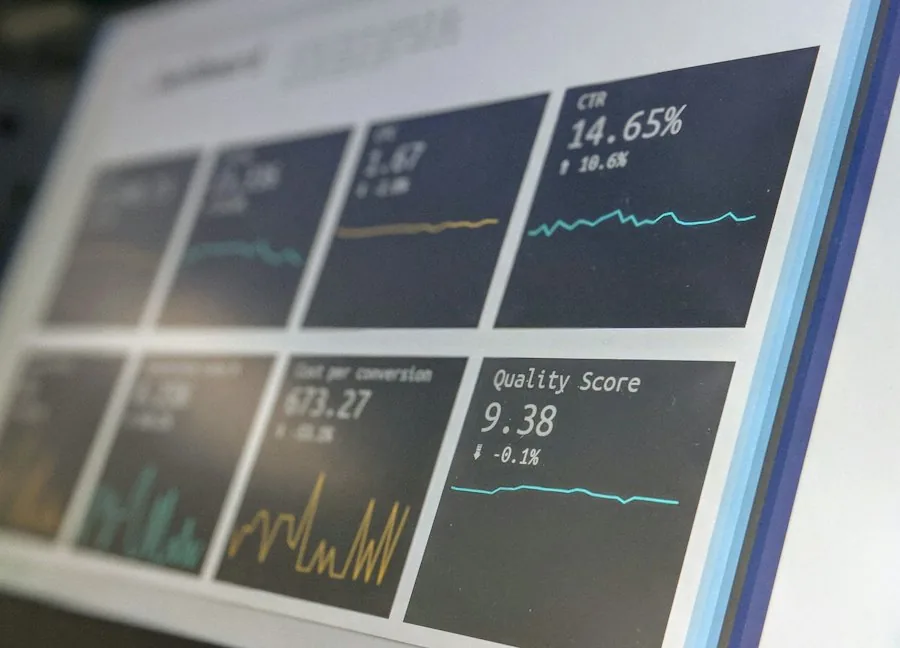
Policy without monitoring is a statement of intent, not a control. A functioning governance framework includes the technical infrastructure to detect AI tool usage, flag policy deviations, and provide leadership with visibility into how AI is being used across the organisation. This is the same monitoring and observability capability that underlies effective managed services and workflow automation infrastructure — applied specifically to the AI tool layer. For organisations in high-regulation sectors, including FinTech and banking, this monitoring capability is also the foundation of demonstrating regulatory compliance.
Provide sanctioned alternatives — and communicate them
The most important component of a Shadow AI governance framework is giving employees a better option. Sanctioned AI tools deployed with enterprise agreements, integrated into existing workflows, and supported by training will displace Shadow AI naturally. But they need to be actively communicated — employees who do not know that a sanctioned alternative exists will continue using the tools they already have. The policy, the tools, and the training need to be visible, accessible, and regularly reinforced.
Review and update continuously
The AI tool landscape changes fast. New platforms emerge, existing tools change their terms of service, and employee use patterns shift as capabilities evolve. A governance framework built once and left static will be outdated within months. Build in a regular review cycle — at minimum quarterly — to assess whether the tool tiering still reflects current risk profiles, whether monitoring is capturing the full landscape, and whether sanctioned alternatives remain competitive with what employees might find on their own.
Case Study: SynPhera
SynPhera: Building the Governance Layer That Enterprise AI Needed
SynPhera needed to give large enterprise clients complete visibility into how AI was being used across their organisations — which prompts were being submitted, by whom, to which models, and under what data handling conditions. Prospire built the full governance platform: a multi-tenant prompt audit layer, access controls that enforced policy at the point of AI interaction, usage dashboards for compliance teams, and the cloud infrastructure to run it all at enterprise scale. The result was a platform that turned unmanaged AI use from a liability into a governed, auditable practice — and became a core differentiator in SynPhera's market positioning.
Explore the SynPhera case study ›Frequently Asked Questions
What is the difference between Shadow IT and Shadow AI?
Shadow IT refers broadly to any technology used without IT approval — apps, devices, cloud storage. Shadow AI is a specific and more dangerous subset: AI tools that don't just store or transfer data, they actively process and learn from it. When an employee uses a consumer AI chatbot for work tasks, they are not just moving data to another system — they are feeding it into a model that may retain, analyse, and potentially reproduce it. The risk profile is fundamentally different, which is why Shadow AI needs its own governance approach rather than being folded into a general Shadow IT policy.
Can we just block AI tools at the firewall level and call it done?
In theory, yes — in practice, no. Blocking specific AI domains at the network level creates a cat-and-mouse game: new tools emerge constantly, employees use personal devices on mobile data, and browser extensions bypass domain-level blocks. More importantly, blocking without providing sanctioned alternatives doesn't remove the demand — it just makes the usage invisible. A governance framework that pairs policy with access to approved tools is significantly more effective than a purely restrictive approach.
How do I know if my organisation already has a Shadow AI problem?
Start by asking your IT team to list every AI platform currently being accessed across your corporate network. If the list is short — or if the question itself takes time to answer — you almost certainly have a Shadow AI problem. Other signals: employees are producing AI-quality output (polished summaries, fast-drafted reports) without any sanctioned AI rollout; departments are purchasing AI subscriptions without central procurement awareness; your AI acceptable use policy was last updated before 2023. Any one of these is a meaningful indicator.
Is Shadow AI always intentional misuse, or are employees just trying to do their jobs?
Overwhelmingly the latter. Most Shadow AI use is driven by employees who have discovered that AI tools make them genuinely more productive, and who have not been given a sanctioned alternative. They are not bypassing policy out of carelessness — they are filling a gap their organisation has not yet addressed. This is actually important context for how businesses should respond: the answer is not to discipline employees but to build the infrastructure that meets the demand they have already demonstrated.
What should the first step be for a business leader who wants to address Shadow AI?
A no-blame audit. Before you can govern Shadow AI, you need to understand its scope — which tools are being used, by which departments, for which tasks, and with what kinds of data. This means combining a self-reported employee survey (anonymised for honesty) with IT-side analysis of network access logs. The goal is a complete picture, not a list of people to reprimand. From that baseline, you can build a tiered policy that acknowledges employee needs, establish sanctioned alternatives, and design the governance infrastructure that makes AI use visible and manageable going forward.
Your Employees Are Already Using AI. Make Sure It's Working For You.
Prospire's AI governance team works with businesses to audit Shadow AI exposure, design tiered governance frameworks, and deploy the sanctioned AI infrastructure that replaces risk with productivity. The conversation starts with a free assessment.