
Key takeaways
“When every competitor has already negotiated the same freight rate and the same shelf price, the advantage moves to whoever wastes least between the two.”
Retail and logistics leaders have spent years squeezing the obvious costs. Supplier terms are renegotiated, routes are consolidated, stores and depots are right-sized, and the spreadsheet has run out of easy rows. Meanwhile, customer expectations, carrier charges, labour costs and returns keep pushing in the other direction. What remains is a different kind of cost: the small, repeated waste inside thousands of daily decisions about stock, orders, exceptions and customer queries. This guide is for operations, finance and technology leaders in retail and logistics who want to understand where AI can reduce that waste and how to start without disrupting the business.
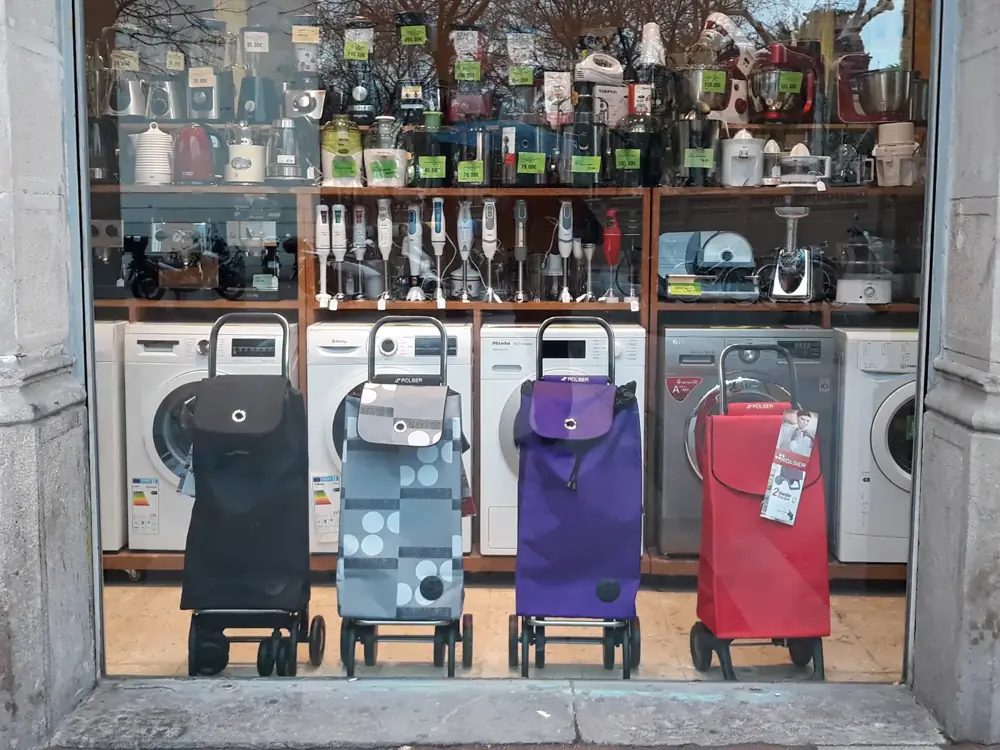

Where the Squeeze Is Coming From
Margins in retail and logistics are rarely lost in one place. They erode through a set of pressures that arrive together and compound each other. Understanding them separately is useful, because each one calls for a different response.
- Customer expectations. faster delivery, free returns, accurate tracking and instant answers have become baseline. Each raises the cost of serving an order without raising the price.
- Fulfilment and transport cost. carrier surcharges, last-mile complexity and fragmented delivery windows make every additional stop more expensive.
- Labour. wage pressure and the difficulty of hiring for seasonal peaks push up the cost of every manual process.
- Inventory risk. stocking too much ties up cash and leads to markdowns, while stocking too little loses sales. Demand is less predictable than planning models assume.
- Returns. particularly in online retail, returns carry transport, handling and resale costs that can erase the margin on the original sale.
- Price transparency. customers compare prices instantly, which limits the ability to pass costs on.
The common thread is that most of these pressures are not solved by a better rate card. They are driven by operational complexity: more SKUs, more channels, more exceptions and more promises per order. Complexity is a cost that shows up as people, delays and errors, and it is exactly where software that can make judgement calls at scale is most useful.
Why the Traditional Cost Levers Are Running Out
The classic playbook still matters, but each lever has diminishing returns. Procurement savings are bounded by supplier relationships and by what competitors can also negotiate. Network consolidation reduces cost until service levels start to suffer. Headcount reductions improve one quarter and then show up as slower response, more errors and more fatigue. Basic automation, such as rules-based scripts, helps with predictable tasks but breaks when inputs vary.
Why earlier automation did not close the gap
- Rules cannot cover the exceptions. a delayed shipment, a mismatched invoice, a damaged item or an unusual customer request does not fit a fixed flow, so humans still handle the tail. That tail is where most of the time goes.
- Systems do not talk to each other. orders, inventory, carrier, warehouse and customer systems each hold part of the picture. People bridge the gaps by copying data and chasing updates.
- Forecasts are static. planning models refreshed weekly or monthly cannot react to a sudden shift in demand or a disrupted lane.
- Reporting arrives late. dashboards describe what went wrong last week, rather than prompting a decision today.
AI changes the economics of this tail. Language models and agent systems can read unstructured inputs such as emails, delivery notes and customer messages, decide what is needed and act across several systems with human approval where required. They do not remove the need for good operations. They make it affordable to apply attention to cases that previously went unattended.
When we look at operations in these sectors, the largest opportunities are usually not dramatic. They are small leaks multiplied by volume. A few minutes per exception, a little overstock, a modest share of avoidable returns: individually trivial, collectively material.
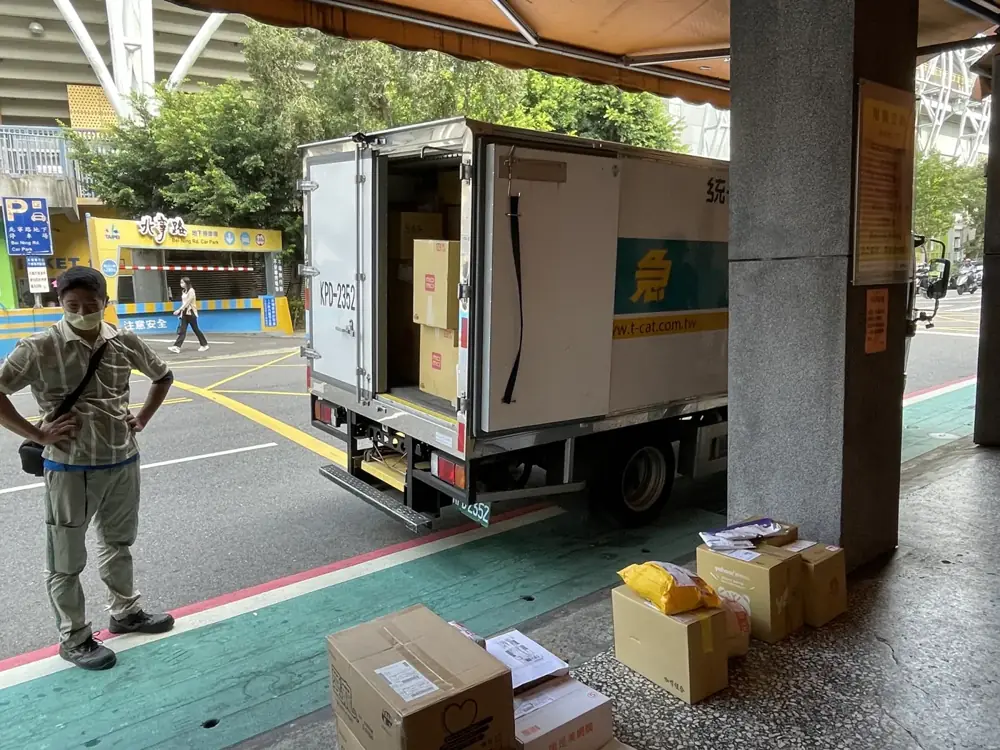
Common places the margin leaks
- Demand and replenishment decisions. static reorder points lead to overstock in some locations and stockouts in others, with markdowns and lost sales as the result.
- Order and exception handling. address problems, split shipments, backorders and carrier delays are often resolved by email and phone, with each case consuming staff time.
- Customer service volume. a large share of contacts are routine queries about order status, returns and delivery windows, which are cheap to answer automatically and expensive to answer by hand.
- Returns processing. inconsistent decisions about refund, restock or dispose, and slow inspection, increase cost and reduce recovered value.
- Back-office reconciliation. matching purchase orders, delivery receipts, carrier invoices and customer payments is repetitive, error-prone work.
- Route and load planning. last-minute changes are handled by experience instead of optimisation, creating avoidable mileage and failed deliveries.
The leaks also compound across functions. A late delivery generates a customer contact, which generates a refund request, which generates a reconciliation task. Tackling one link in that chain without the others limits the gain, which is why mapping the whole flow matters.
How to Find Where AI Can Move Your Margin
A good AI programme in this sector starts from the P&L and works backwards to the process. Resist the temptation to begin with a technology and look for somewhere to use it.
- Pick the cost lines that matter. list the operational costs that are largest or growing fastest, such as customer support cost per order, cost per return, overstock write-downs or failed delivery cost.
- Trace each line to its decisions. identify who decides what, how often, from which systems and with what information. Note where staff are copying, chasing or re-checking.
- Measure the baseline. capture volume, handling time, error rate and cost per case for the candidate process. Without it, you cannot prove a gain.
- Score by value and feasibility. favour processes with high volume, clear rules for success, accessible data and recoverable errors.
- Check the integrations. confirm that the order, inventory, warehouse, carrier and customer systems can be reached by API. Typical environments include SAP, Oracle, NetSuite, Salesforce and WhatsApp Business.
- Choose a first use case with a clear owner. one operations leader who wants the problem solved and will commit to the measure.
Prospiretech's AI strategy and advisory service runs this prioritisation with operations and finance together, so that the shortlist reflects both margin impact and ease of delivery. Our retail and logistics practice applies the same lens to commerce, fulfilment and supply chain workflows.
Pulling the AI Lever Without Breaking the Operation
Retail and logistics run on tight schedules, and peak season does not wait for a pilot to finish. The way to pull the AI lever safely is to introduce it in stages, with the live operation protected at every step.
- Start with assistive mode. let the system recommend, draft or prepare, with staff approving. This builds a record of accuracy before autonomy increases.
- Automate the routine tail first. order status queries, return eligibility checks, invoice matching and standard exception notices are well-bounded and recoverable.
- Keep a human route for judgement. define the thresholds, such as value, customer type or confidence, above which a person decides.
- Integrate, do not bolt on. an agent that cannot read from and write to your order and inventory systems creates new manual work. Design the connections first.
- Monitor quality continuously. track accuracy, escalation rate, customer outcomes and cost per case, and set alerts for drift.
- Plan for peak. test volume scenarios and ensure cloud capacity scales with demand and cost stays visible.
This is where autonomous AI agents and intelligent workflow automation fit: agents that handle multi-step tasks across systems, supported by workflows that route exceptions to the right person. Underneath, cloud cost and performance optimisation keeps the platform that runs them efficient, so the AI saving is not given back as a larger cloud bill. For warehouses and depots where connectivity is patchy, an adjacent example is workflow automation that keeps working without a network connection, built for a global data centre operations firm — a different industry, but a similar reliability requirement.
How Prospiretech Would Approach Margin-Focused AI
We would start by choosing one cost line, such as customer contacts per order, cost per return or exception handling time, and measure it first. We would then build an agent-based workflow around it: autonomous AI agents that read incoming messages and documents, query your order, inventory and carrier systems through APIs, and resolve routine cases or prepare a recommendation for a person to approve. The stack would be selected for your environment, using OpenAI, Claude or Gemini models as appropriate, integrated with platforms such as SAP, NetSuite, Salesforce or WhatsApp Business, on AWS, Azure or GCP with cost monitoring from the beginning. Exceptions escalate to staff through Slack or Teams. We would review results against the baseline before widening scope. We do not claim outcomes in advance; the aim is a measured first step.
Explore Prospiretech's case studies ›Frequently Asked Questions
Where does AI have the biggest margin impact in retail and logistics?
Typically in high-volume, repetitive decisions: customer service queries, order and delivery exceptions, returns handling, invoice and shipment reconciliation, and demand or replenishment signals. Each is small per transaction but large in aggregate. The best starting point is the one with a measurable baseline, accessible data and a clear owner, not the most technically impressive one. Sector-specific pilots usually prove more convincing to finance than generic examples, because they show the effect on lines the CFO already tracks every month.
Will AI replace warehouse and customer service staff?
In most deployments the immediate effect is to absorb routine volume so that people can focus on exceptions, quality and service. Whether that translates into fewer roles, avoided hiring or better service is a business decision. Being explicit about that choice at the start helps staff engage with the change and keeps the financial case honest. Pair the operational metric with a financial one, such as cost per case, so that the value of time saved is visible in the same report the board already reads.
How do we avoid AI errors affecting customers?
Begin in assistive mode, where the system drafts and a person approves, and move to autonomy only for categories that show consistent accuracy. Set thresholds for value and confidence above which a person decides, keep an audit trail of actions, and monitor outcomes. Make it easy for customers to reach a human. These controls are standard practice rather than optional extras. Track customer satisfaction beside cost throughout, because savings that damage service will reappear later as churn, refunds and repeat contacts.
Do we need to replace our existing systems first?
Usually not. Modern AI agents integrate through APIs with existing ERP, order management, CRM and messaging platforms. The practical requirement is that the data and actions you need are reachable. Where legacy systems lack interfaces, a targeted integration layer is normally cheaper than a replacement, and can be built in parallel with a pilot. If data is inconsistent across systems, the first step is often a small clean-up and a single reference view of orders and stock, which pays back well beyond the AI project.
How long before we see a return?
It depends on the process, the integrations and the quality of data, so be wary of fixed promises. A bounded first use case can often be in front of real volume far sooner than a full transformation programme, and the baseline you capture beforehand lets you read the result directly. Plan the business case in stages, with a decision gate after the first use case. Treat the first use case as a template: the integrations, monitoring and approval patterns you build can then be reused, which lowers the cost of each subsequent one.
Find the margin your price list cannot
When the usual levers are spent, the remaining gains sit in everyday operational decisions. Prospiretech will help you identify the highest-value AI use cases in your retail or logistics operation and deliver a measured first step. Book a complimentary consultation.