Key takeaways
“Inventory is a bet on the future, placed in the past. The question is how often you are allowed to revise the bet.”
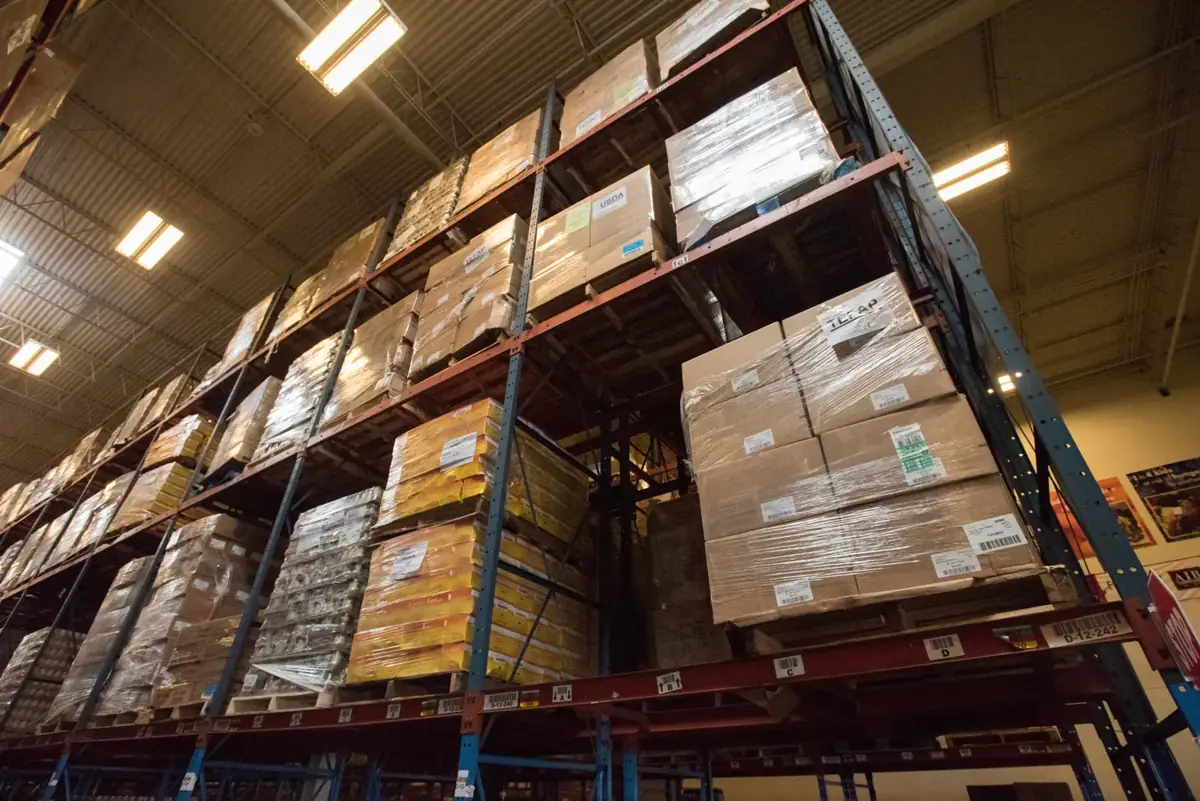
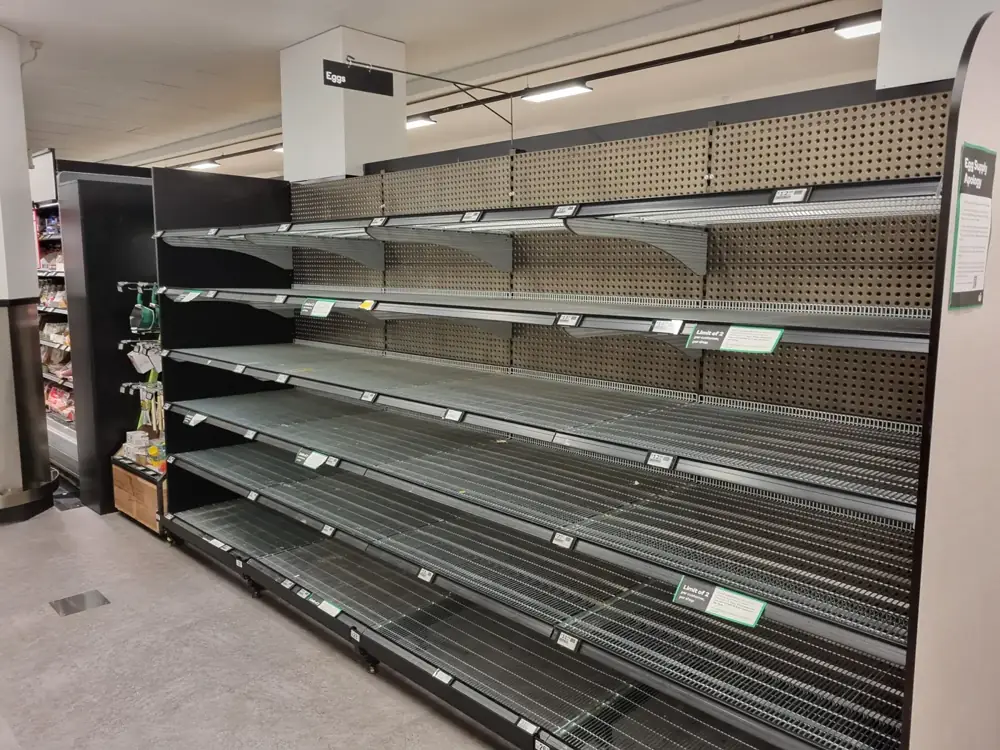
Your best-selling product is out of stock, the customers who wanted it have gone elsewhere, and in the same warehouse a slow mover from seasons ago is taking up several bays. Everyone feels the pressure to fix the warehouse: more space, tighter processes, a new system. But the shelves are only where the mistake becomes visible. It was made earlier, in a forecast, a reorder rule or a spreadsheet that nobody updated. This guide is for retail, e-commerce and logistics leaders who want to find where inventory decisions go wrong and build a system that makes them better, faster and at SKU level.

Why Stockouts and Overstock Happen at the Same Time
If you simply had too little stock, every SKU would run short. If you simply had too much, nothing would. Having both at once tells you that the total quantity is not the issue. The problem is allocation: the wrong units, in the wrong place, bought at the wrong time.
That makes it a decision problem, not a storage problem. Somewhere upstream, a forecast was too low for one product and too high for another, a reorder point was set once and never revisited, or a promotion was planned without telling the people who buy stock. By the time the effect reaches the warehouse, it is too late for the warehouse to correct.
The usual sources of bad inventory decisions
- Forecasting at the wrong level. Forecasts built for categories or months hide the individual SKU and location behaviour that determines whether you run out.
- Static reorder rules. Reorder points and safety stock levels set once, from past averages, do not react to a trend, a season or a competitor's move.
- Disconnected signals. Sales from stores, your website and marketplaces, supplier lead times, promotions and returns sit in different systems, so nobody sees the full picture.
- Lead time variability. Planning on the supplier's quoted lead time rather than the real, variable one leaves you short whenever deliveries slip.
- Slow human loops. Reviewing stock weekly in a spreadsheet means a fast seller can sell through well before anyone reacts.
Why More Stock and Bigger Warehouses Do Not Help
Most businesses respond to repeated stockouts in understandable ways. Each one reduces the pain briefly and then adds to the underlying problem.
Common responses and why they disappoint
- Buying more across the board. Higher safety stock everywhere reduces stockouts a little and increases overstock a lot. It spends working capital on the SKUs that least need it.
- More warehouse space. Capacity makes excess stock easier to hold, so the pressure to fix the cause eases and the problem grows.
- A new warehouse management system. A WMS improves how stock is received, stored and picked. It rarely changes how much is ordered, which is where the imbalance starts.
- Reorder points in the ERP. Useful as a baseline, but formulas based on historical averages cannot see a demand shift until it has already happened.
- One-off ABC analysis. Classifying SKUs once gives a helpful snapshot. The classification then ages, and nobody has capacity to redo it often enough.
- Spreadsheet planning. Experienced planners can do remarkable things in spreadsheets, but not across every SKU-location combination, every day.
The common thread is that each response adds resources to a decision process that remains slow, coarse and disconnected. The better answer is to improve the decisions themselves: make them more granular, more frequent and better informed, and have people review exceptions instead of producing every number by hand.
What the Imbalance Costs You
The two halves of the problem are expensive in different ways, and the costs seldom appear on the same report.
The cost of running out
- Lost sales. A customer who wanted your best seller and found it unavailable often buys from a competitor, and does not come back for that purchase.
- Damaged ranking and loyalty. On marketplaces, availability can affect visibility. Repeat stockouts also teach customers not to rely on you.
- Expedited costs. Emergency orders and air freight to refill a gap are far more expensive than planned replenishment.
The cost of holding too much
- Tied-up cash. Money sitting in slow-moving stock is not available for the products that are selling.
- Markdowns and write-offs. Aged inventory eventually has to be cleared, often at a loss, and in fashion or seasonal categories the window is short.
- Carrying costs. Storage, handling, insurance, damage and shrinkage all increase with the volume held.
- Opportunity cost. Warehouse space and handling time used for stock that is not moving cannot support stock that is.
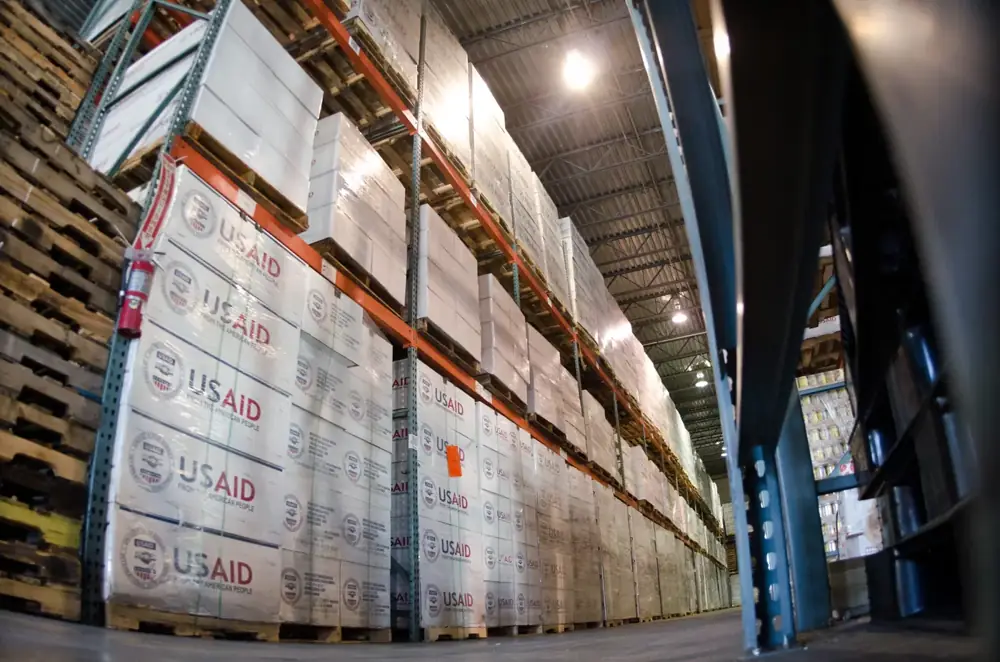
Taken together, the business is paying twice: once for the sale it missed and again for the stock it could not sell. Each decision looks reasonable in isolation, which is why the pattern persists.
How to Diagnose Your Inventory Decisions
Start by looking at decisions rather than at stock. The aim is to learn how good your planning is at SKU and location level, and how quickly it reacts.
A practical diagnostic
- Measure forecast error by SKU and location. Aggregate accuracy can look healthy while individual products are badly wrong. Look at your top sellers and your slowest movers separately.
- Plot days of cover across the range. A healthy range has a sensible spread. If your best sellers show days of cover near zero while a long tail shows many months, the allocation is out of balance.
- Time the response to a signal. When a SKU begins selling faster than planned, how many days pass before a purchase order or transfer is raised? That delay is your exposure.
- Code the cause of each stockout. Was it a forecast miss, a late supplier, a data error, a missing promotion signal or an approval delay? Without causes, fixes are guesses.
- Count the systems and spreadsheets. List every place that holds a piece of the picture: sales channels, warehouse, purchasing, supplier portals. Each gap is a place where information is delayed or lost.
- Check supplier lead-time reality. Compare quoted and actual lead times over recent orders, and note the variation as well as the average.
- Find out who decides. If a few planners make most calls by experience and manual review, you have both a capacity limit and a key-person risk.
The answers show whether the bigger gain lies in data, forecasting, response speed or process, which determines where to invest first.
Building an Inventory System That Decides Before the Shelf Is Empty
The target is a system in which demand signals are combined continuously, forecasts are made at the level where decisions are taken, and routine actions are prepared automatically for people to approve or adjust.
A practical framework
- Unify the data. Bring sales from every channel, stock positions, purchase orders, supplier performance, promotions and returns into one governed layer on a platform such as Snowflake or Databricks, using cloud architecture and strategy principles so it can scale.
- Forecast at SKU-location level. Build demand models that account for seasonality, promotions, price and trend, and operate them with MLOps and model engineering discipline so accuracy is measured and drift is caught.
- Set dynamic policies. Replace static reorder points with targets that reflect forecast uncertainty and real supplier variability, differentiated by SKU importance.
- Let agents watch the exceptions. Autonomous AI agents can monitor stock positions continuously and draft replenishment orders, inter-location transfers or markdown proposals when a position moves outside tolerance, with the reasoning attached.
- Automate the execution. Use intelligent workflow automation to move approved actions into SAP, Oracle, NetSuite or Zoho, confirm with suppliers, for instance through WhatsApp Business API, and update the plan.
- Keep planners in charge. Set approval thresholds, review forecast overrides and feed human knowledge about launches, partnerships or weather back into the system.
As an adjacent example, from IT operations rather than retail, we built a team of specialised agents that continuously watch live signals, correlate them and propose or execute approved actions, with every step logged with its reasoning (A Team of AI Agents Running IT Operations, 24 Hours a Day). The same pattern of monitoring, diagnosis and approved action applies to stock positions. Done well, the planner's day changes from building the numbers to judging the exceptions, which is a much better use of their experience. For more on sector context, see our work in retail and logistics.
Intelligent Replenishment
This describes how Prospiretech would scope and build the system, not the result of a completed retail project. We would start by auditing a sample of recent stockouts and overstock positions to identify their causes, then consolidate sales, stock, purchase and supplier data into a cloud data platform. Demand models at SKU-location level would be trained, versioned and monitored. Agents would watch positions against dynamic targets and prepare replenishment, transfer and markdown proposals for planners, who approve within defined thresholds. Approved actions would flow into your existing ERP or commerce stack, whether SAP, Oracle, NetSuite or Zoho, with supplier confirmations handled through channels such as WhatsApp Business API. We would begin with a single category to prove accuracy and then extend by range and location.
Explore Prospiretech's case studies ›Frequently Asked Questions
Why do we have stockouts and excess stock at the same time?
Because the total quantity of stock is not the issue; its allocation is. Forecasts that are too coarse, reorder rules that never update and data scattered across systems mean some SKUs are under-bought while others are over-bought. A stockout on a best seller and surplus on slow movers usually comes from the same decision process. Improving forecasts at SKU and location level and shortening the time between signal and action addresses both sides together, rather than trading one for the other.
Do we need a new warehouse management system?
Only if your current one limits how you receive, store or pick stock. A WMS governs what happens inside the building, whereas this problem sits in what is ordered and where it is sent. Many businesses find that the larger gains come from the planning layer: data, forecasting and replenishment decisions. We would normally add that layer around your existing systems and revisit the WMS only if the diagnosis shows it is a genuine constraint.
How accurate can SKU-level forecasting be?
It depends on the product, the volume of history and how stable demand is. New products, highly promotional lines and very slow movers are inherently harder to forecast than steady sellers. The practical aim is not perfection but a measurable improvement, honest uncertainty ranges and fast reaction when reality diverges from the forecast. Measure accuracy by SKU group against your current method, and use the uncertainty to set safety stock where it matters most.
What do AI agents do in inventory management?
They act as tireless monitors and preparers. An agent can watch stock positions, sales velocity and supplier status across all channels, detect that a SKU is heading for a stockout or that another is building excess, and draft the appropriate action, such as a purchase order, a transfer between locations or a markdown proposal. A planner then reviews and approves, within thresholds you set. The agent handles volume and speed; people handle judgement and exceptions.
Where should a retailer start?
Pick one category or a single channel and diagnose it thoroughly: forecast error, days of cover, causes of stockouts and response time to a demand shift. Integrate the data sources that category needs, build and test a forecast, and run recommendations alongside your current process before relying on them. A contained start keeps risk low, produces credible numbers for the wider business and shows planners the tool supports their judgement rather than replacing it.
Fix the decision, not just the shelf
If your best SKU is out of stock while slow movers pile up, the answer is in your signals and decisions, not your square footage. Prospiretech's team can diagnose where your inventory planning loses accuracy and design a system that acts earlier. Book a complimentary 30-minute consultation with our team.